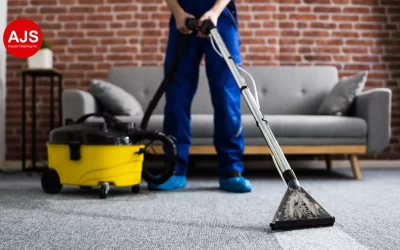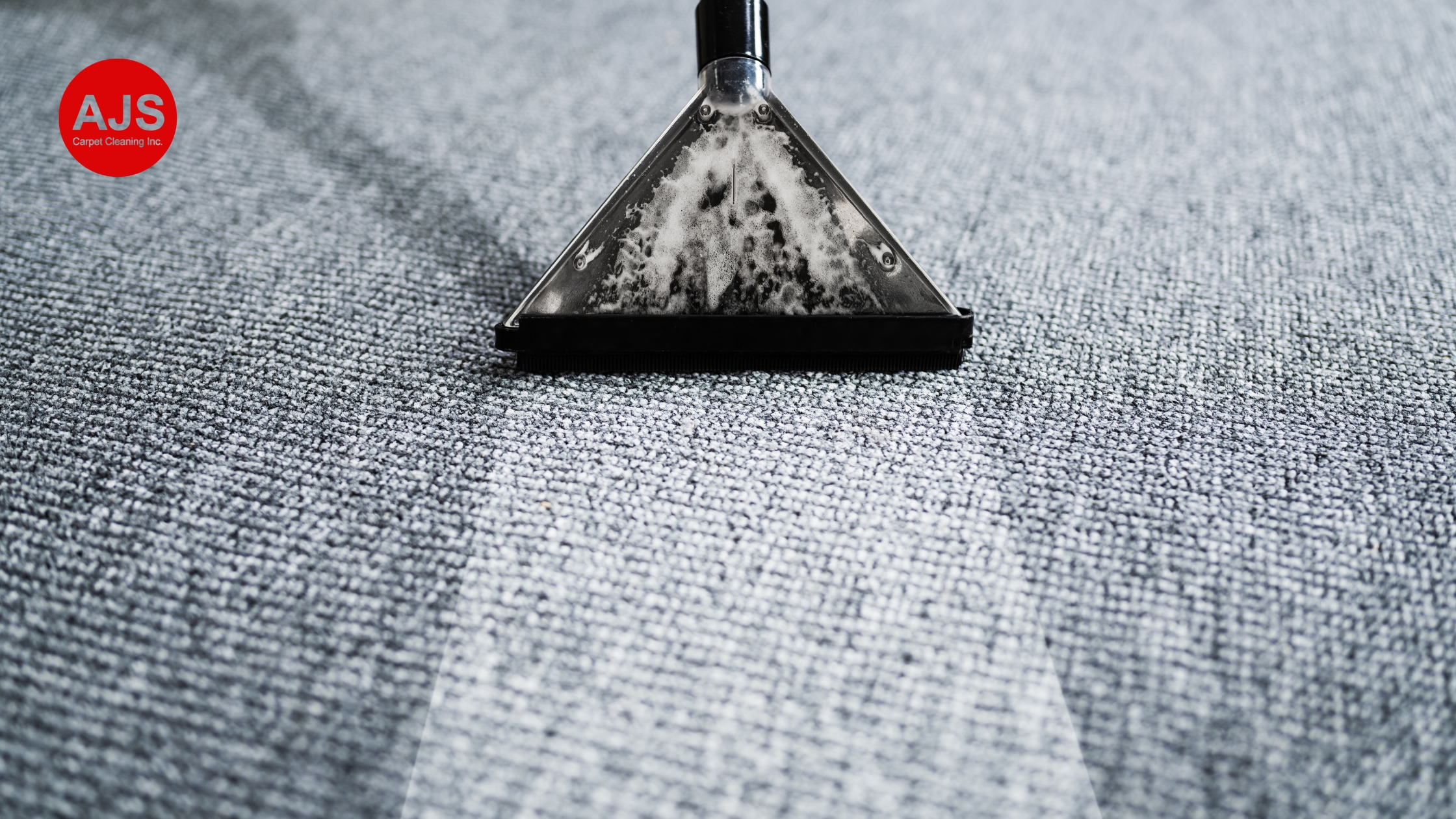
The term “Steam Carpet Cleaning” is actually a misnomer since steam is not actually used in the cleaning process, except insofar as it appears when the temperature of the water being used, is high enough to produce some steaming. The better and more correct nomenclature would be “Hot Water Cleaning”. Many carpet cleaners though, are more apt to use the word “steam” in their description of the process, because it partially avoids the negative connotation of the carpet being water soaked.
Basically, hot water cleaning involves among other things, spraying the carpet with a hot pretreatment emulsifier to get soluble soiling agents into solution or suspension. After agitation and a suitable dwell time, the chemical reagents are rinsed out of the carpet with hot water at a temperature of 120 – 150 degrees Fahrenheit, and about 95 % of the residual moisture is extracted with a powerful vacuum system.
Once upon a time, this method was very inefficient and led to many customer complaints, but nowadays, with the evolution of advanced cleaning equipment and procedures, most people are satisfied with the results, and choose this method over all others. Undoubtedly, wet chemical cleaning methods are far more effective than other systems and will extract deep down stains and soiling that other procedures cannot get out. That is why most carpet manufacturers recommend carpet cleaning by hot water extraction in order to meet their warranty requirements.
Despite this however, there are lingering problems with this method of cleaning that must be addressed in order to get the best possible results.
Here are the pros and cons:
PROS
1. When used properly by trained and experienced technicians, it removes more soils and stains than any other method available today.
2. Extraction is usually implemented at high temperatures which will kill many insects and microorganisms which may be residing among the carpet fibers.
3. Cleaning can be done with a wide variety of carpet extractors, generating high vacuum and pressures of anywhere between 30 PSI for portable machines to 3,000 PSI for truck mounted equipment.
4. Detritus and chemical residues are pulled out of the carpet and out of the home, and deposited into a waste tank.
5. Powerful driers or air movers are now available to extract the residual moisture from the carpet, quickly.
CONS
1. Extended drying time. Compared to other carpet cleaning procedures, hot water extraction will have an average drying time of 2 to 24 hours, depending on the severity of the conditions prior to cleaning, the skill of the technician doing the job, and the condition of the equipment used. Drying time will usually be quicker with a more powerful vacuum system and more knowledgeable technicians, but this does not happen by rote. The technician will always have to be attentive to prevailing conditions, and know how to react accordingly.
2. If carpet is left wet for extended periods, it can lead to bacteria and mold growth. Wet carpet will also have an unpleasant smell.
3. Other potentially negative effects are rapid re-soiling, browning, and wicking.
A competent, experienced carpet cleaning company will always endeavor to leave your carpet as dry as possible, in order to avoid the negative effects associated with hot water carpet cleaning, and leave your carpet thoroughly clean and fresh.
Look for a carpet cleaning company that will offer a 100% guarantee on their hot water steam cleaning method.
Good carpet cleaning is both an art and a science that requires specialized knowledge and experience in order to be effective. Carpet is always a great choice for floor covering in a home, not just because of its beauty but also because of the wide variety of options available to the homeowner seeking coordination in the decor of each room. But carpet is also a filter that will collect and accumulate soil and detritus from the interior environment,and become stained if not cleaned and protected regularly.
Almost all carpet installed in the average home over the last 30 years or so, is made from what is known as 5th Generation stain resistant nylon. This material has been designed to address the problem mentioned above, but it comes with several limitations and carpet cleaners and householders need to be aware of this, so that appropriate measures may be taken to avoid problems.
During the 5th generation nylon carpet manufacturing process, a pigmented dye is first applied to the carpet fibers to give it the desired coloration, and then an acid dye resistor, which is essentially a colorless dye, is sprayed on to fill in the spots on the carpet fibers that did not receive any pigment. This is to ensure that acid-base dyes like those commonly found in colored beverages will not fill in those spots and stain the carpet.
Finally a protective coating is applied to the carpet. It bonds to the fibers and serves to increase the surface tension and resist all kinds of soiling and stains.
A note about protectors here.
There are several different types of protector, and each kind has its limitations. The cheapest protectors are made from either colloidal silica or silicones and are very limited in their ability to resist stains. Protectors made from fluorochemicals are much more expensive, but much more effective, and in fact this kind is the only type I would recommend. Fluorochemicals serve to protect the dye resistor and help to keep it bonded to the carpet fibers. They form a coating on the carpet fibers that helps to keep dirt from settling and lodging within the fibers. They have outstanding wet and dry soil resistance. Vacuuming and spotting is much more effective on carpet protected by fluorochemicals.
Despite this, there are limits to the protection provided. 5th generation nylon carpets are not resistant to strong disperse dyes such as shoe polish, hair spray, and mustard. They are also stained by some disinfectants, bleaches, acme medications, antistatics, biocides and fungicides, and stain resistance is affected negatively by and chemical residues remaining in the carpet after cleaning. That is another reason why it is very important that powerful equipment should be used to rinse thoroughly and extract cleaning agents completely.
Any protective treatment applied to carpet will wear off with time. Usually it will last for 12 to 18 months. Carpet manufacturers recommend that a protector like Dupont Stainmaster, 3M Scotchguard, Monsanto Gold Label or Bridgepoint Maxim, should be applied after carpet cleaning.
The protector will resist soiling, make your carpet look good after vacuuming, and increase the time interval between cleanings. Your carpet cleaner will also be able to do a much more efficient carpet cleaning job.
One of the first questions I often hear from many first time callers looking for a suitable carpet cleaning company, is “How much do you charge?” I must hasten to say that I don’t get this question so much from people who call after visiting my carpet cleaning website. Not just because they can get a rough estimate from my Quote page, but because they have already browsed the site and gleaned information about what carpet cleaning entails, and probably have determined that we know what we are doing and are competent enough, and fair enough to merit their trust. These people usually just ask for a carpet cleaning appointment.
According to the best industry sources, the average price being charged for carpet cleaning nationally, is 30 cents per square foot. The average home has about 1000 square feet of carpeting, so on an average, the typical householder will be paying $300 for a whole house cleaning. This cost varies widely of course, and differs from state to state, and area to area. There will also be obvious differences in what carpet cleaning companies will charge, and in my experience, for residential carpet, this could range from 7 or 8 cents per square foot, to 75 or 80 cents per square foot. So the average 1000 square foot whole house carpet cleaning cost could range from $70 to as much as $800 dollars.
How come?
Well, always remember that you get what you pay for, and the buyer should beware.
Let’s examine the low price cleaning scenario first. All of us must have seen those mailers and fliers trumpeting carpet cleaning for $6.99 per room, or whole house for $69.95. I don’t believe it is possible to clean carpet properly for those prices. Some of these offers are “bait and switch” where the company entices the householder to get a foot in the door, and then begins to explain that there is an extra charge for just about every thing else. Others just don’t know how to clean carpet and either don’t use any chemicals or use cheap solvents, and cheap equipment, and just leave a big problem, and dirtier carpet for the householder.
Now let’s examine the higher pricing. It is necessary to use the best reagents and equipment in order to do a good job cleaning carpets. A typical top of the line truck mounted set-up will cost $50,000 to $70,000. Competent, reliable, efficient technicians must be paid $12 – $20 per hour in Utah, for example. Add to that Federal and State taxes, insurance, uniforms, and overheads like advertising and marketing, maintenance and training, and other administrative cost, and you can see how a job that might take 2 to 3 hours to do, could not be profitable at $70.
A fair pricing should also include essentials like vacuuming, pre-spotting, grooming, moving light furniture, and ordinary stain removal. Different companies will charge different amounts for this, but you can be assured that a certified professional cleaning company that wants to stay in business and build up a clientele through referrals, will take all these factors into consideration, before arriving at a price for you.
One more thing.
There are usually two main methods of pricing. One is per room. The other is per square foot. I believe the per square foot pricing method is the fairest for both parties concerned. We all know that rooms come in different sizes. I once cleaned a home where the master bedroom was 1200 square foot!
Finally, always ask for a discount, and check for coupons and special offers if you feel like it. Your carpet cleaning company will always try to accommodate you, especially if the cleaning job is for more than 1000 square feet of carpet.
Most carpet cleaners are wary about ink spots or stains. Many of them have experienced limited success in removing them from carpet. Ink stains are particularly difficult to deal with when found on light colored high density plush pile carpets.
One of the peculiar characteristics of ink spots, is the ease with which it spreads in the carpet after an initial application of a solvent. That is why extra care must be taken to avoid rubbing the stain. Blotting, or extraction with a wet vac is the recommended method for its removal.
Ink is usually produced by dissolving large amounts of varying kinds of pigment in some sort of soluble resin. Some types of these resins are water soluble, but others are only soluble in chemicals like alcohols, ethers or other volatile organic compounds (VOC). Incidentally, contrary to popular opinion, ink can be hazardous to health if ingested, so be careful.
Everybody knows that there are many kinds of inks with varying chemical properties. Children will use everything from crayons, ball point pens, drawing inks to markers. All children are not equally careful. Some will spill ink accidentally, while others will do it while trying to find out how the pen works.
The challenge then, is to determine how to proceed when attempting to remove ink from the carpet. When ink made with a solvent soluble resin is spotted first with a normal ink removal volatile organic solvent like alcohol or acetone, the resin alone may be removed, leaving the stain on the carpet. We need therefore, in this case, to always start with a non-volatile solvent.
There is another potential problem where the ink is made from solvent soluble resins. If a water based solvent is used first, it sets up a barrier which causes the VOC solvents to be much less effective, and the stain could set.
The first step in removing ink from the carpet then, is to find out if the stain is water soluble. Test for color fastness in an inconspicuous place like inside a closet or in a corner behind a door. If the color begins to disappear, continue with this type of solvent. If not, blot up this solvent and use the water soluble solvent.
Water is the best first option for a householder. Get the spot wet, and use a clean white towel to blot (not rub) the spot repeatedly. Change the towel when it becomes totally soiled. You don’t want to spread the ink to other locations.
If this doesn’t work, try using a little mild dish washing liquid. Dilute by mixing about one teaspoon to a small cup of water. Use this as you did before with the water alone.
If ink still remains, try using a VOC like rubbing alcohol next. This should get rid of most freshly deposited ink. If none of this works, call in a professional carpet cleaning company. Make sure the company employs well trained and certified professionals who will know something about cleaning chemistry.
You may spare yourself a lot of grief, and maintain ink stain free carpet, by doing all of this.
Victor Nugent is Owner and President of AJS Carpet Cleaning, Inc. with over 10 years experience in the Carpet Cleaning business.
Is do-it-yourself carpet cleaning a smart way to go?
In order to arrive at an intelligent answer to this question, we need to first of all, find out what may be in, or on the carpet to cause it to be unclean or unhealthy, and what procedures may be necessary to get the carpet clean.
Here are some possibilities:
Gravel, grease, grime, grit, gum, hair, skin scales, lint, industrial waste and pollutants, mud, pet stains, pollens, sand, scum, soil, soot, asphalt, car exhaust, dirt, dust, make-up, food particles, ink, tar, smoke, blood, urine, feces, and vomit.
There might also be organisms such as fleas, carpet beetles, ticks, lice, mold, fungus, bacteria and all kinds of germs, that can live, breed, multiply and deposit the product of their metabolism in your carpet.
These foreign substances that mar the appearance of your carpet and make your interior home environment unhealthy, are either brought into your home on the feet of people or animals, or is generated and dispersed into the air while cooking. They may also of course, come from the normal, continuous shedding of human or animal skin scales.
These materials may be classified into three types. Insoluble, Water soluble, and Other solvent soluble. Insoluble contaminants usually make up 50 to 75 % of foreign matter in your carpet. It generally consists of material such as sand, grit, hair, fibers, etc., which will not dissolve in water or other ordinary solvents. That is why frequent vacuuming is so important.
Water soluble soils are derived mainly from food or drink residues and similar fluids. These are also fairly easy to remove from your carpet.
Soils which are only soluble in other chemicals, present a more difficult challenge. These may have come from deposits of grease, tar, asphalt, oils, cosmetics, ink, or body fluids, and vary widely in chemical properties. Most are acidic in nature and composition, but some may be basic, or even neutral complexes.
When considering how to remove them from the carpet therefore, it is necessary to determine, if practical, where they came from, what they are, and what combination of chemicals will be most effective.
Carpet cleaning therefore involves a number of different procedures and processes.
To maintain a carpet that is clean in appearance and free from substances that may be deleterious to your health, the following should be done:
Place wipe-off mats at the entrance ways, inside and outside, to trap and remove material that might otherwise be tracked unto your carpet. Clean these mats often.
Vacuum frequently. Do this every day if possible, but at least once per week. Check the vacuum cleaner filters and belts, and empty the dust collection bag often.
Clean up spills immediately, while they are still moist. Flush with water and use a clean white towel and blot up as much as possible before it dries up or becomes fixed to the carpet fibers.. Do not wipe from side to side as this may only smear the stain or cause it to spread more.
Clean up apparent light soiling frequently – every 4 to 12 weeks, before the staining is ground into the carpet, especially in traffic lanes, at entrance ways, before couches, and in other heavily used areas. This may be done with a small portable carpet steamer.
Call in a professional carpet cleaning company to remove those difficult stains and to do a deep steam cleaning every 12 to 18 months, in order to get out that deep down crud, and satisfy the carpet manufacturers’ warranty requirements.
Evidently, it is smart to clean carpets yourself – up to a point!
Victor Nugent is Owner and President of AJS Carpet Cleaning, Inc. with over 10 years experience in the Carpet Cleaning business.
A clean carpet will always help to preserve and maintain a pleasant home environment. Few conditions are more irritating than a lingering foul odor that comes up from the carpeting in a home. People have various levels of tolerance to bad odors, but a smelly carpet is very problematic for most people and especially those who are very sensitive to odors.
Carpet acts as a filter, so many things can cause carpet to smell bad. It could be caused by minor deposits of soil, dust, pollen, animal dander, cooking oil, grease or atmospheric gases. Soil that is tracked into the home on shoe soles may have come from factories with pollutants, garages, lawns and gardens, road asphalt etc.
Human and animal hair, lint, fibers from clothing, skin scales, body oils, and food and drink spills all may be deposited unto carpet in the home at some time or another. These can react chemically with each other or the carpet fibers, or they can provide food for microbes which generate obnoxious odors as a by-product of their digestive processes.
To remove the odor, we may either mask it by trying to cover it up, or remove the odor source.
Masking is done by applying a substance that replaces the unpleasant odor with a pleasant one – like a perfume.
Simple carpet cleaning will remove most sources of bad odor mentioned above, and the carpet will smell much better. However, the worst carpet odors are usually caused by mold, mildew and urine, and are more difficult to eliminate.
Mold and mildew will grow where the carpet is not dry and there is moisture and food – like what you will find among dirty carpet fibers. The bad odor smell does not come from the mold itself but from their waste which is worked on by bacteria. So in order to get rid of this kind of smell, it is necessary not only to neutralize the chemicals produced by the bacteria, but also to kill the bacteria with suitable disinfectants. Most carpet cleaning professionals will use a Quaternary Ammonium compound to do this. Most of the time, mold problems occur under the carpet, and it would be necessary to lift the carpet and treat the underside. But that is another story.
Another good method of deodorization, is enzyme treatment which is used primarily for removal of odors caused by urine. Enzymes will digest the organic material and bacteria that are responsible for the problem. This type of treatment is therefore most effective for removal of odors caused by bacteria which grows in the carpet and break down the urine, transforming it into amino-acids, thus causing the pungent ammonia like urine smell.
In all cases, in order to remove odors, the source of the contamination must first be determined.
A well-trained professional carpet cleaning company will do this for you.
For more cleaning tips call us at 801 368-0705
We clean carpet in your area in Utah, including Provo, Orem, Spanish Fork,Holladay, Bountiful, Riverton and Midvale.
The type and degree of carpet cleaning that will be necessary to remove urine odors and stains depends on an individual’s personal level of tolerance to odors in particular. Each individual has different and unique levels of sensitivity to odors. Each situation is also unique. The urine contamination may have been caused by a one-time piddling accident by a small pet, or some dribbling around the toilet by a small child, or it may have accumulated over time from the activities of a Great Dane who has claimed that territory.
The extent of carpet cleaning must therefore be related to how completely you want the odor to be removed and how much you are willing to spend to do this. Someone who lives with a pet in the home would naturally be more tolerant of a malodorous condition, than someone who has just moved into an apartment that was recently vacated by the owner of an untrained pet.
The source and extent of the contamination must first be determined before treatment is attempted. Here are several things we can use to do this:
The Nose. This means getting down on hands and knees and sniffing the carpet. This is not always a good or popular option, and is not adequate where there is extensive contamination.
A Moisture detector.Urine residues attract and retain moisture. which can be detected by good quality instruments.
Ultraviolet light. This is the most efficient, and widely used method. Urine fluoresces under ultraviolet light, and all the urine spots will show up, but the room will have to be dark.
Check the carpet backing. In severe cases, urine stains will be most readily seen on the carpet backing, but this will involve lifting the carpet. In any case however, if the contamination is bad enough, the backing will need to be treated also.
It will also be necessary to check the walls, baseboards, drapes, upholstered furniture, and even the clothes closet for contamination, because urine gives off gases during decomposition, and these gases may permeate the whole house through the ventilation system, and lodge in porous material or fabrics anywhere..
When urine leaves the body it is generally free from bacteria and other microorganisms and primarily consists of uric acid with varying amounts of urea, cholesterol, some enzymes, pigments and trace quantities of other chemical compounds. It is slightly acidic, with a pH value between the range of 5-6.
Urine soaked carpet become a fertile feeding and breeding environment for bacteria and other microbes which break down the urine and creates amino acids. This decomposition results in an unpleasant odor. Oxidation of the uric acid also leads to the formation of some crystalline salts, in an alkaline state. In the presence of moisture, these give off ammonia, which is why the smell of urine is so pervasive when the carpet is wet.
Fresh urine may be removed by applying warm water to the spot and blotting it repeatedly with a towel., and then applying small amounts of dilute dish washing detergents, blotting between applications.
Once the urine stain and odor has set in, the best thing to do is simply call in a professional. You may save yourself a lot of grief by doing this.
Stain removal tips from AJS Carpet Cleaning for residents in Salt Lake City, Provo, Riverton, and all along the Wasatch Front in Utah.
Probably more people are induced to change their carpet due to unsightly red stains, than those who do so because the carpet is badly worn. This is especially true where there is light colored carpet. In many instances, a homeowner will just try to cover the ugly red stains with an area throw rug instead of having the carpet cleaned. This is sometimes an acceptable or tolerable solution, but perhaps not the best possible one.
Many red stains are difficult to remove. Some may have become permanently fixed and therefore impossible to eliminate, but in most cases, if we understand the source and nature of the problem, we can get rid of the stain.
Red stains are either synthetic or organic. Synthetic stains are usually formed by the color additive FD&C Red #40 which is an azo dye approved by the FDA for use in foods, drugs and cosmetics. Drink manufacturers use it extensively to color various drink mixes especially Kool-Aid, but it is also to be found in numerous other types of food, medicines (like cough syrup), furniture stains, and cosmetics. Organic stains are those derived from naturally occurring substances and products like blood, jams, jellies, tomato and other fruit juices, and condiments.
The first question to be asked before tackling a red stain problem is: What is the source of the stain? If you know the answer to that question, the task becomes much simpler. In any case, when the stain is fresh, time is of the essence. Blot up as much of the spill as you can, immediately. A clean white cotton towel is preferable, but paper towels will do. Be careful not to rub the stain sideways as this may cause it to spread. If you have a wet vac, flood the area with water and then suck up all the moisture you can. This procedure will be most helpful where the stain is derived from natural substances that are soluble in an aqueous stain removal agent.
Stains caused by synthetic dyes are much more difficult to remove without affecting the coloring agents used to dye the carpet fibers initially. In order to achieve this it is usually necessary to apply a combination of chemical solutions to the carpet fibers, and apply heated water vapor to get the dye in solution and transfer it to an absorbent material like a cotton or paper towel. A clothes iron with the setting at moderate heat is usually used for this. Great care must be used, or the color could be bleached out of the carpet fibers, thereby presenting another, and probably much worse problem.
Perhaps the best solution is to call in a professional cleaner who is familiar with the properties of industrial chemicals, and who has sophisticated equipment to deal with this type of problem.
“Do-it-yourself” carpet cleaning is great for routine carpet maintenance in the home, and that is why many people will swear by their little stand alone steamers which they use regularly to freshen and brighten their carpet. Sooner or later however, they realize that it is necessary to follow the recommendation of the manufacturer, and have the carpet cleaned at least once every 18 months in order to meet warranty guidelines. It may also have become evident that those little household machines are not powerful enough to handle a heavy build up of soils and stains.
For most people, carpeting is a major investment, and therefore regular periodic cleaning by a professional carpet cleaning company is essential for extending its life and preserving its appearance.
You should decide which method of carpet cleaning will suit you best. Professionals will often use many different techniques, including dry cleaning, steam cleaning, foaming or carbonation. My recommendation for deep cleaning is always the hot water extraction or steam cleaning method. Find out which method the company will use, and see if it conforms to the requirements of your manufacturers warranty.
So how do you find the best carpet shampooer for the money you are prepared to invest, or can afford to spend for your carpet cleaning?
Here are some guidelines to help you choose:
Ask friends and family or business associates to recommend a company whose services have proven to be satisfactory. If you are browsing online, check out the company’s reviews.
Check out the company’s history and performance on Better Business Bureau. See what sort of record they have with local business organizations like the Chamber of Commerce. See if they have been certified by the Carpet & Rug Institute (CRI) or the Institute of Inspection, Cleaning and Restoration Certifications (IICRC).
Make sure the company is licensed, insured and bonded, and that they do background checks on their employees. After all, they may be going into the innermost sanctums of your home.
Ask what kind of guarantee they will be offering on their services.
Be cautious with offers that appear too good to be true. It often is. A creditable company will price its services based on the area cleaned, so be wary of those that offer a price per room instead of a price per square foot. There may well be hidden costs. As you surely know, rooms come in various sizes. Or a “bait and switch” operator may be at work there. Normally, there should be no extra charge for vacuuming, grooming, pre-conditioning, moving light furniture or removal of regular spots and stains.
Remember, the cheapest is not usually the best, and may prove to be much more costly in the long run.
Perhaps the best way to guarantee that your carpet is being cleaned by a competent certified professional, at a fair price, is to use one that is certified as a Seal of Approval (SOA) Service Provider by the Carpet and Rug Institute.
We all know that cold water is not as efficient in dissolving substances, as is hot water. Cleaning is actually a chemical process where the physical properties of a substance is transformed from one state or condition to a different one, in order to make it easier to manage or extract the soiling agent..
In this case, what we actually want to do, or manage, is to create a condition where we make it easier to remove dirt or soil from our carpet.
The best way to do this is to make it soluble, that is, to turn it into a liquid, so that we can suck it out of the carpet easily. There are many methods we can use to do this. Most people prefer to apply some sort of chemical or cleaning agent, but some people prefer to use hot water or steam alone.
Personally, I prefer to use a chemical, because I find that is the most effective way of getting soils into solution.
In any case, it is always easier to clean with hot water, than with cold water.
The best cleaning temperature range is between 120 – 200 degrees Fahrenheit.
I usually apply the chemical using water at a temperature of 120 – 150 degrees Fahrenheit.
This is the temperature range that I find to be most practical. It is hot enough to be effective with most carpet cleaning solvents, but not so hot that it will damage some carpet fibers or create a personal burn hazard.
When I first started cleaning carpets, I would go to the store and rent a portable carpet cleaner. I would then add “soap” and proceed to attempt to clean the carpet. As you can imagine, the results were not too impressive.
I soon learned that I need to heat the water in the carpet cleaning machine. So I did that and had much better results.
The problem though, was that the water temperature decreased fairly rapidly during cleaning, especially during winter, and of course, cleaning efficiency decreased proportionally. It would become much harder to get the carpet clean, and I would have to try to compensate, by using more concentrated or different chemicals, agitating the carpet fibers more vigorously, or waiting longer to extract the cleaning solution.
Carpet cleaning is most efficient and effective when you can use a machine that comes with a heat-exchanger that allows you to set and control the water temperature at optimum levels.